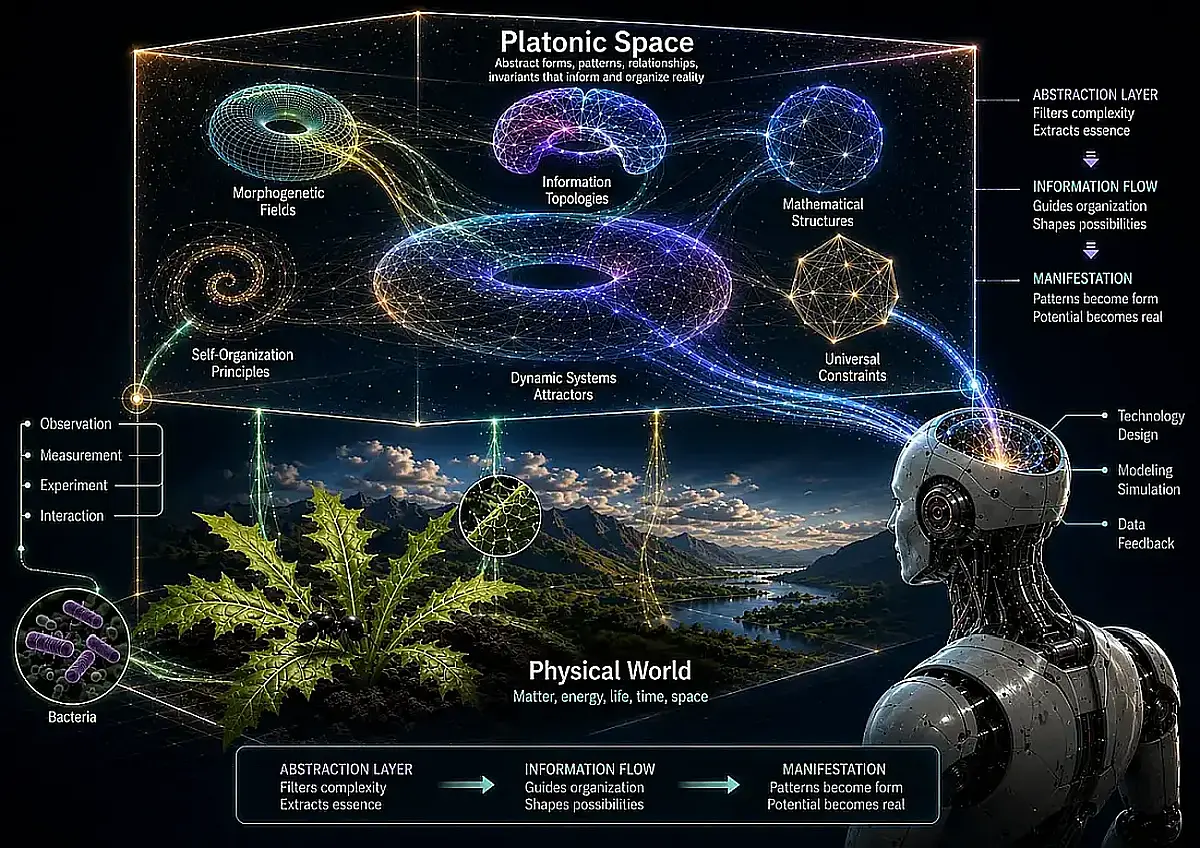
The Organization of Possibility
How possibility becomes organized through developmental biology, systems theory, and Michael Levin's research on basal cognition — and what it suggests about the architecture of living systems. The discussion places these scientific developments into conversation with the cosmology of The Urantia Book.
The Eternal Isle
Explores the structure and dynamics of the master universe, integrating scientific findings with cosmological revelations. It is an online book that delves into topics such as cosmogenesis, the interplay between time and eternity, the concept of infinity, and the organization of the universe into various levels and structures among other sublime cosmic concepts.
Cosmic Creation by Delegation
Illustrates The Urantia Book’s portrayal of cosmic creation through delegated agency, natural law, evolution, Adam and Eve, and human participation.

The Adjutant Mind-Spirits: A Living Framework for Intellectual Growth and Evolutionary Patterns
This essay explores the revelatory concept of the seven adjutant mind-spirits as presented in The Urantia Book, proposing that these divine mind circuits serve not only as catalysts for evolutionary consciousness but also as formative fields akin to morphogenetic templates in biology. Bridging insights from spiritual cosmology, evolutionary biology, and comparative mysticism, the author examines how the adjutants may function as layered, intelligent interfaces between biological life and spiritual development.
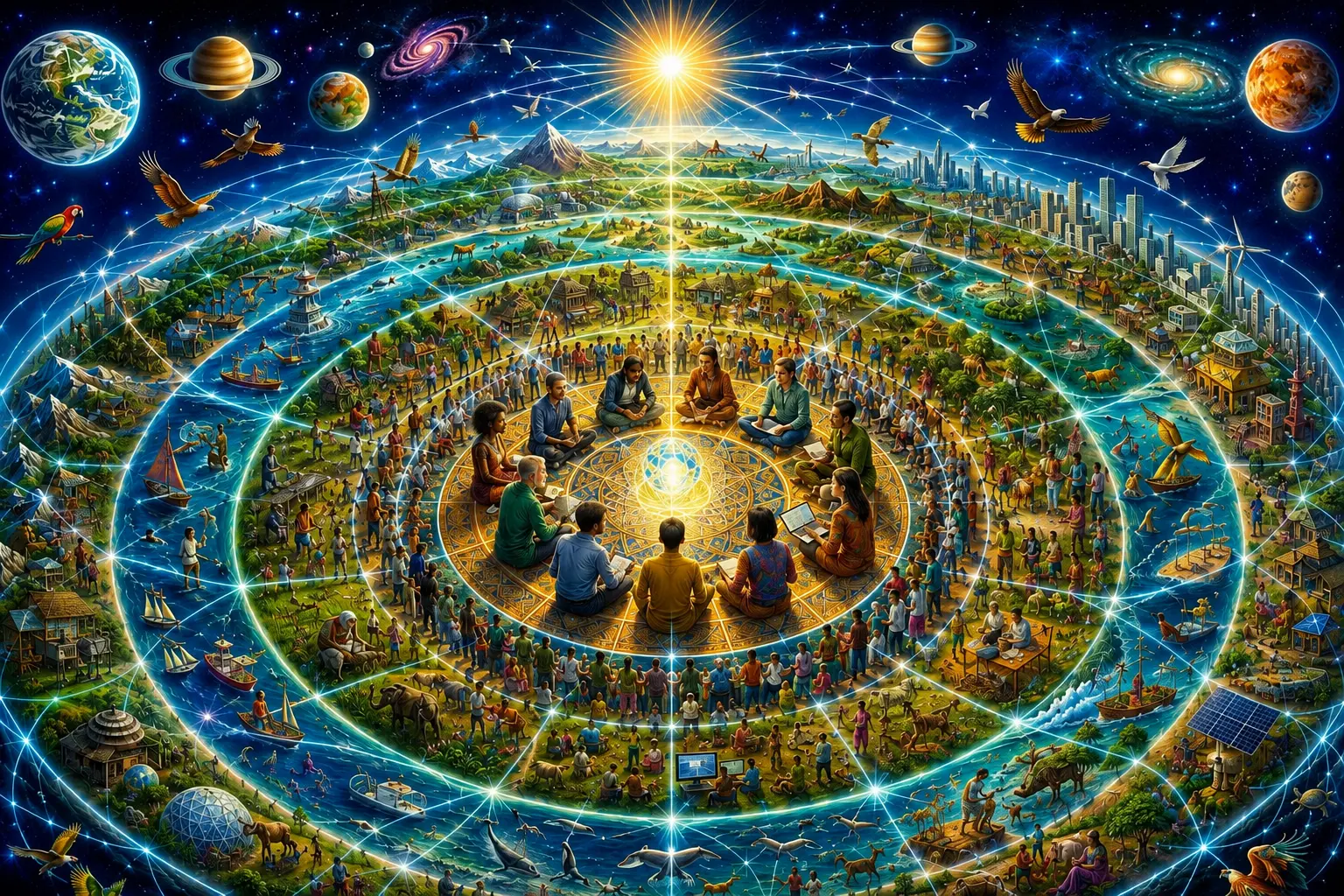
The Supreme Being The Evolving Synthesis of All of Everything in Time and Space
The Urantia Book introduces the term "Supreme Being" as an evolutionary and experiential Deity—the developing synthesis of finite reality in time and space. It places this development within the larger relationships of the infinite-existential Paradise Trinity, God the Sevenfold, and the evolutionary universes, showing how the Supreme progressively embodies the accumulated meanings, values, and experiences of finite creation.
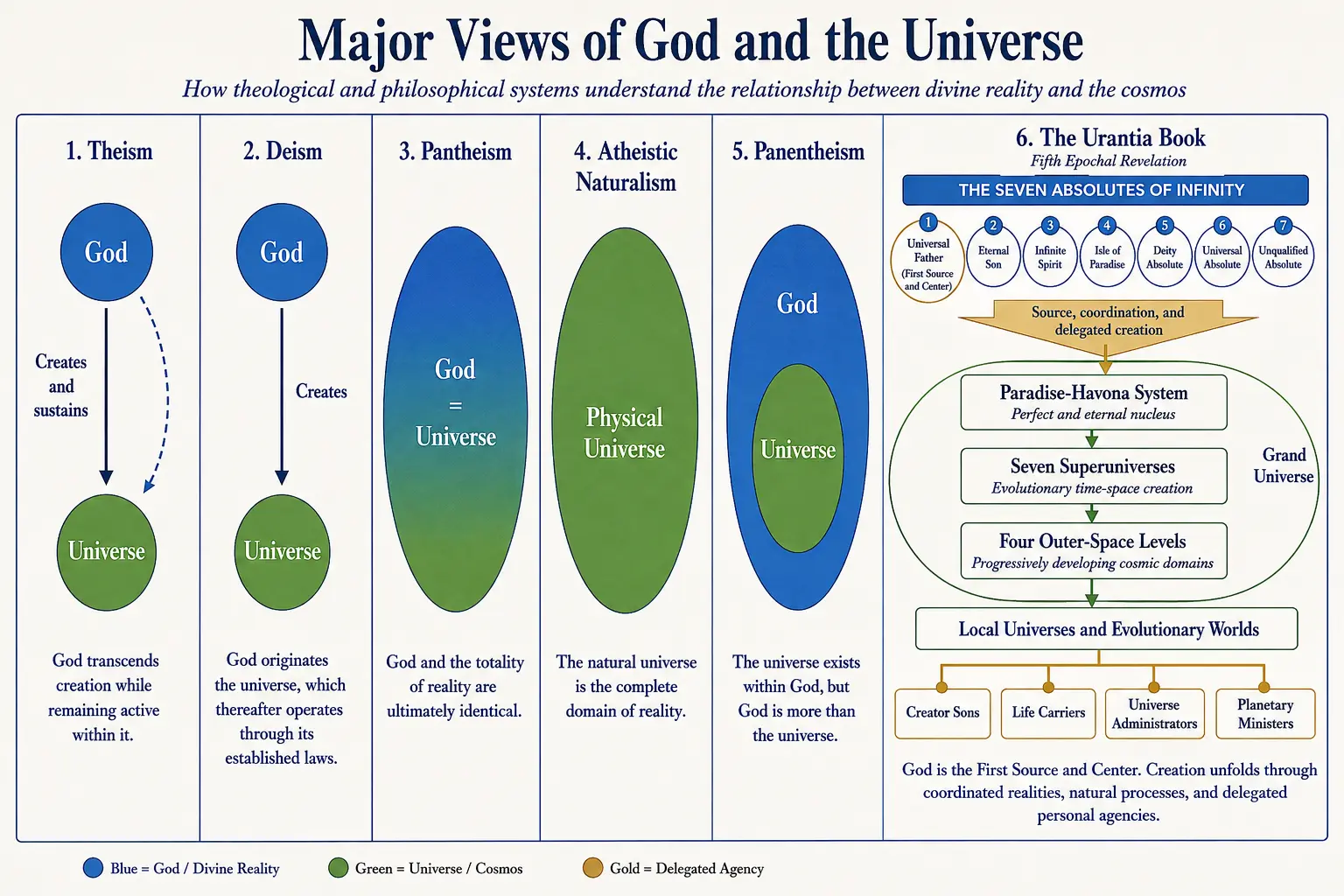
The Father-Infinite
The essay’s central question is essentially: How does the Urantia revelation understand God as both infinite reality and personal Father, and how does that model synthesize or correct traditional human concepts of God? It moves from personality and First Cause through deism, theism, pantheism, materialism, the seven Absolutes, delegated creation, and the physical organization of the universe.
The Urantia Book
The papers described themselves as the Fifth Epochal Revelatoin to humanity. Their purpose is to “expand cosmic consciousness and enhance spiritual perception.”

Multiply Inhabited Solar Systems
Why is Urantia, an experimental “decimal” world, numbered 606 of Satania rather than ending in zero? Israel Dix follows that deceptively simple question through the numerical and organizational clues scattered throughout The Urantia Book, constructing a speculative model of how Satania’s inhabited worlds may be grouped and ordered. His investigation ultimately reaches beyond numbering to the provocative possibility of neighboring inhabited worlds and an underlying plan for the evolving Satania system.
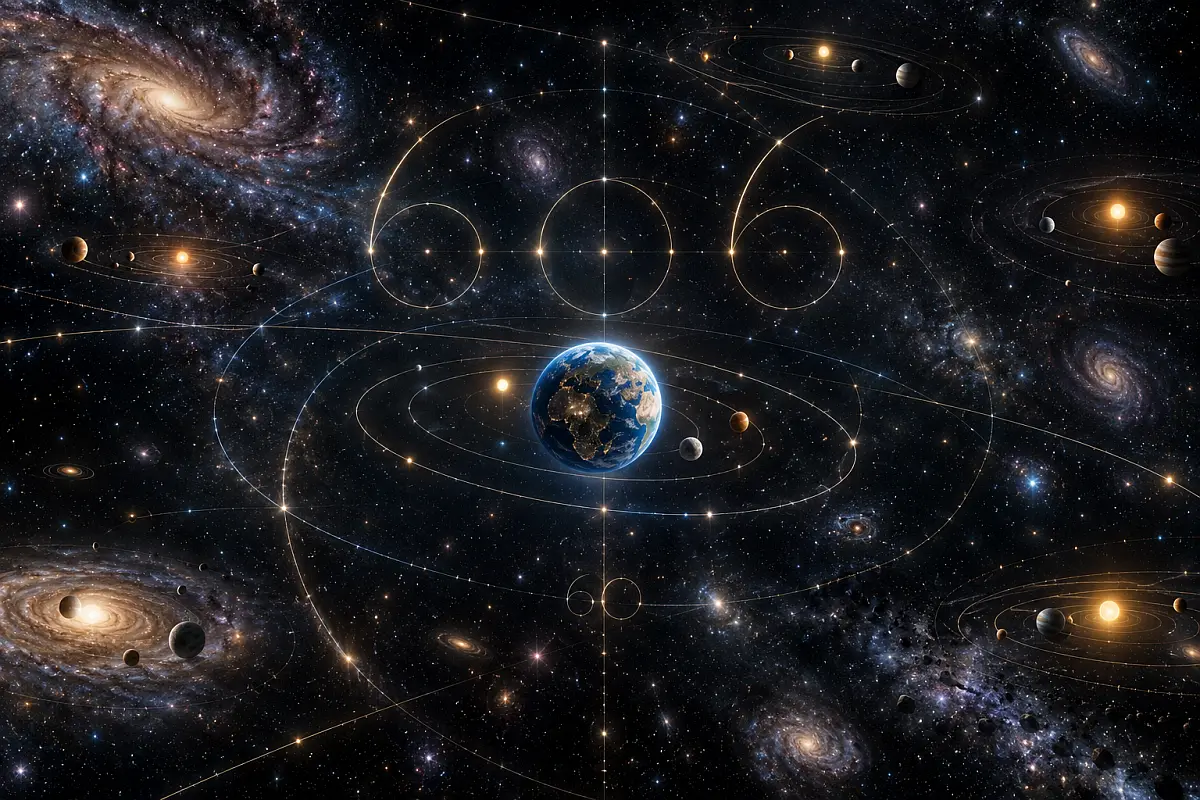
How Urantia is Numbered 606 by the Revelators
How can Urantia be world 606 and yet the 60th decimal planet of Satania? This essay treats that numerical tension as a clue rather than a contradiction, using the revelation’s own descriptions of planetary groupings and administrative “creature-kinship serials” to construct two scenarios in which both statements can be true. The result is a provocative provisional hypothesis that Urantia may belong to one of Satania’s multiply inhabited solar systems.
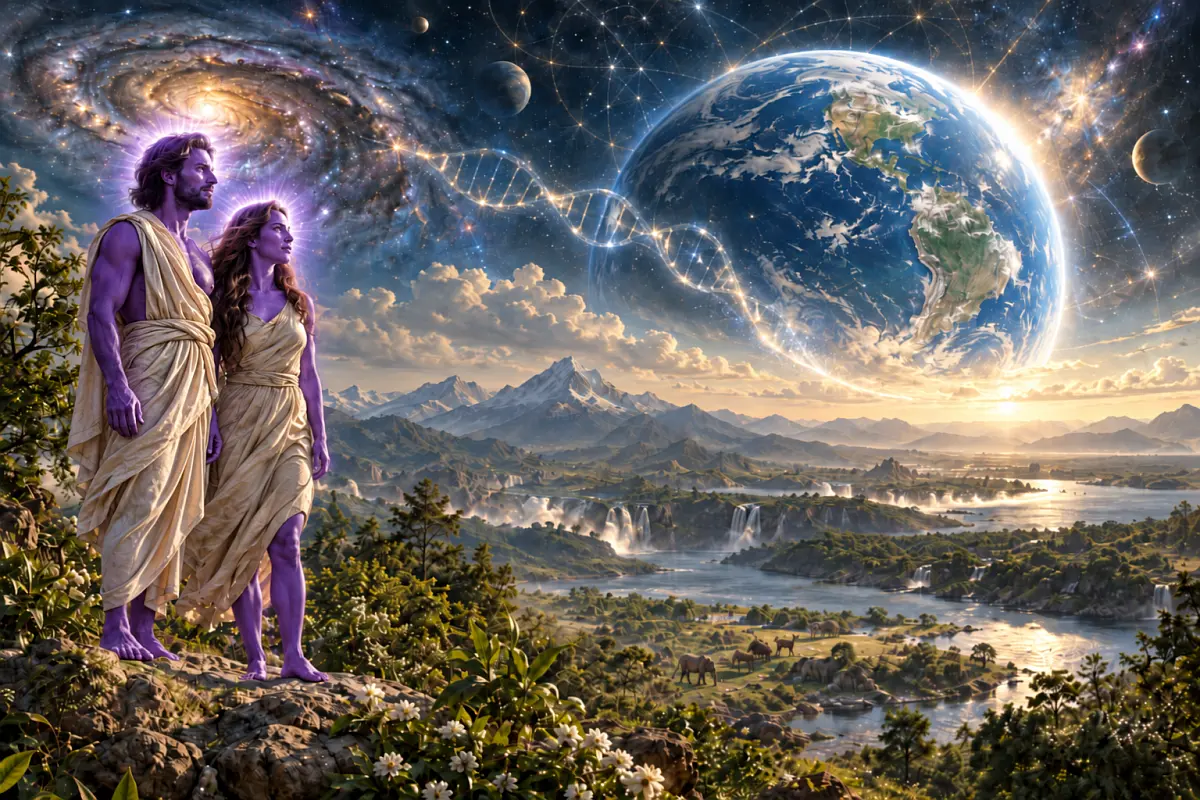
From Cosmic Creation to Adam and Eve
This essay examines Adam and Eve as a case study in the coordination of science and religion (COSAR), tracing the arc from cosmic creation through delegated agency to planetary evolutionary uplift, and considering whether later 21st century genetic findings are meaningfully consistent with the book’s account of an Adamic contribution to human development that was indited in the mid 20th.