
An Inquiry Into TrueWorship From God-consciousness to Supreme-consciousness
This paper explores the enhanced and augmented revelation found throughout The Urantia Book's papers which leavens beyond that which is conventionally and traditionally considered worship. This is a decades-old paper I wrote for a summer study session in Chicago in 2010. Worship has a rich formulation in the Urantia Book.

Restating the Gospel in an Age That No Longer Speaks Its Language
This essay argues that the gospel of Jesus, as expanded in The Urantia Book, must be restated if it is to remain intelligible and effective in a rapidly evolving linguistic and cultural landscape. Religion, properly understood, originates as a living personal experience but inevitably seeks outward expression through symbols, language, and shared practices.
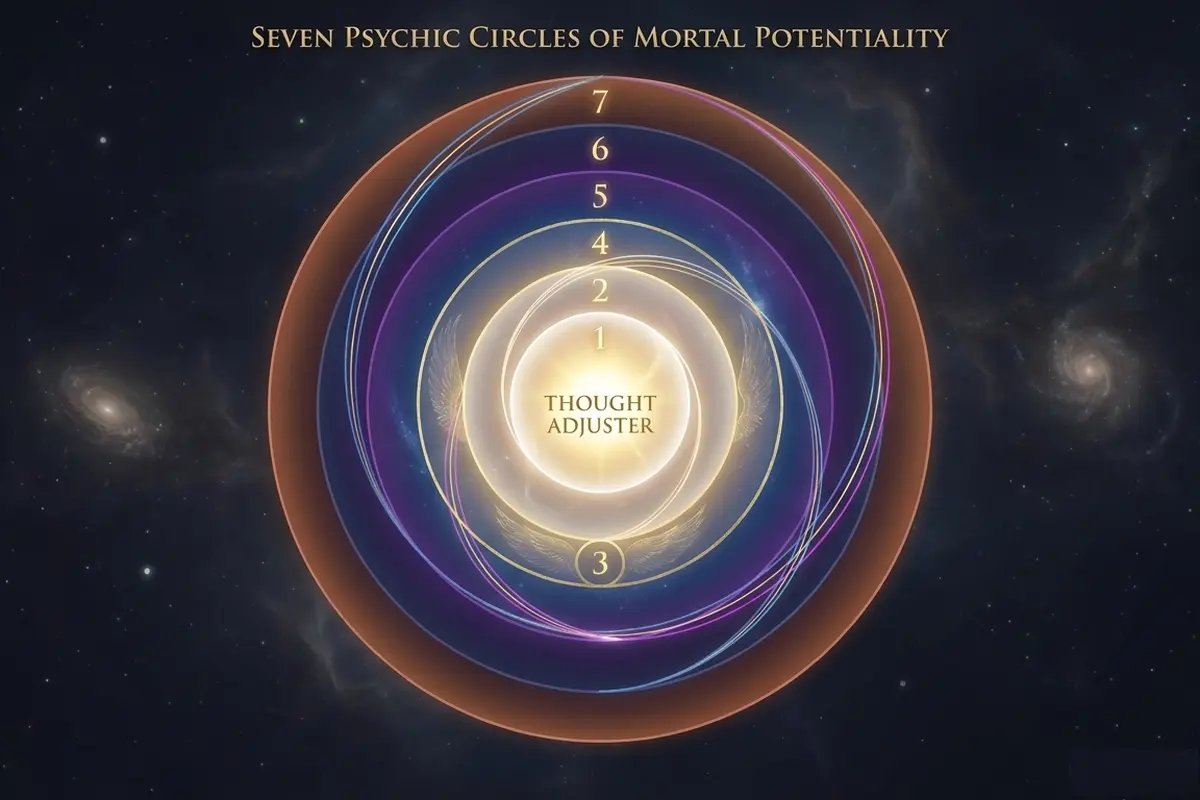
The Seven Psychic Circles
In "The Seven Psychic Circles," Linda Buselli opens a window into one of the most experiential teachings in The Urantia Book: that spiritual growth is not merely believed, studied, or symbolized—it is lived. The circles do not describe a system to be mastered intellectually; they map a life to be enacted from the inside out.

Redeeming Atonement: From Cultural Engineering to Cosmic Awakening
This essay presents a comprehensive re-evaluation of the Christian doctrine of Atonement through the revelatory cosmology of The Urantia Book. It argues that the concept of divine atonement, historically rooted in primitive sacrifice and fear-based religious systems, is a transitional and now outdated human construct. Debold draws on revelatory insights into personality bestowal, cosmic mind, and the adjutant mind-spirits, the essay reframes atonement not as a divine requirement but as a human projection born of moral awakening and spiritual immaturity.

Atonement Reframed: From Repair to Emergence
This essay challenges the legacy model of atonement rooted in substitution, sacrifice, and inherited guilt, proposing instead a cosmological reframing informed by The Urantia Book. Rather than portraying God as a being whose justice demands satisfaction through blood, this perspective presents the emergence of the soul as a co-creative process between the mortal personality and the indwelling Thought Adjuster.

The Urantia Papers: A Journey In and Out of This World Exploring How an Epochal Revelation Came into Human Hands
This essay connects the my fifty-year journey of study and writing with an introduction to historical narratives, biographical interpretations, skeptical critiques, participant diaries, and textual research. The essay distinguishes among various documented events, personal recollections, and conclusions about authorship and transmission. Written from a conviction that the Papers constitute a revelation. It invites readers to examine the historical record, consider competing explanations, and form their own informed judgments.
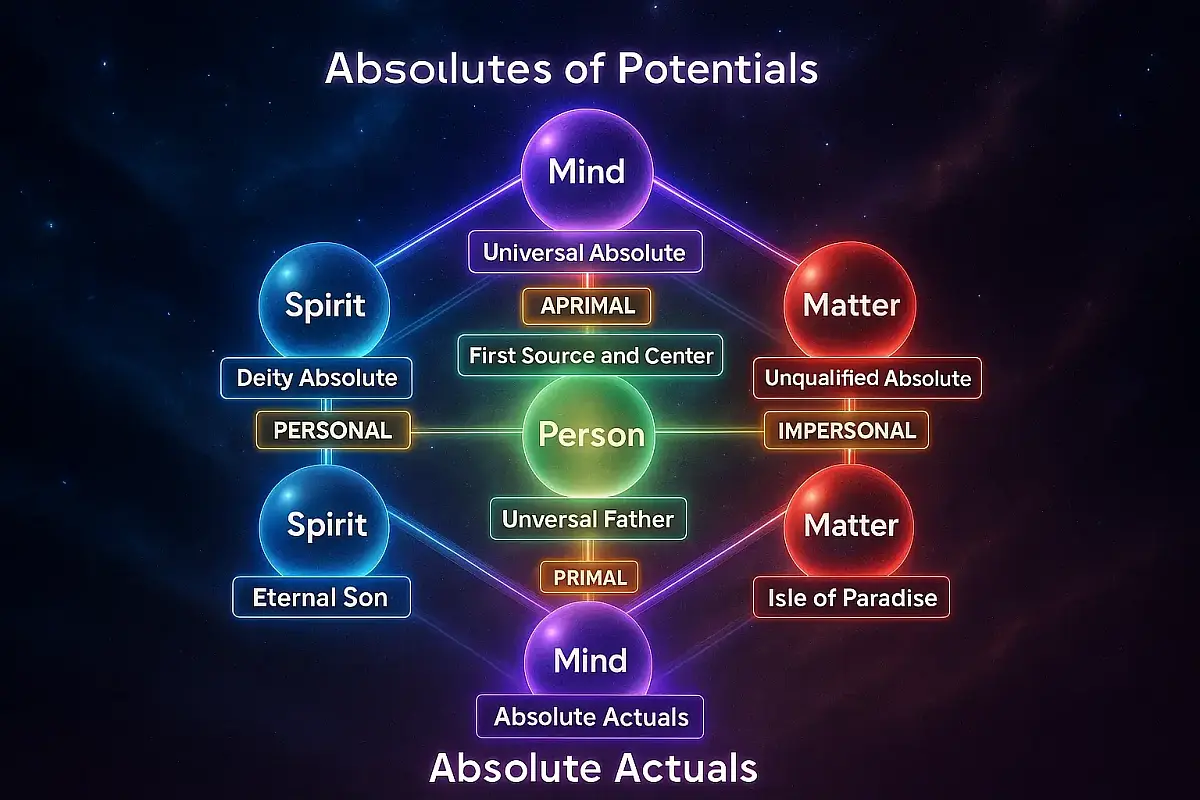
Trinities and Triunities: Expanded Relationships Between all Seven Absolutes
What is the difference between a Trinity and a triunity—and why does it matter? This essay explores The Urantia Book’s distinction between the Paradise Trinity as a unified Deity reality and the triunities as dynamic associations among the Absolutes, using concepts of organic unity and the metaphor of a living tree to make these difficult relationships more understandable. Together, they suggest a cosmic architecture in which unity and diversity are not opposites but complementary expressions of divine reality.
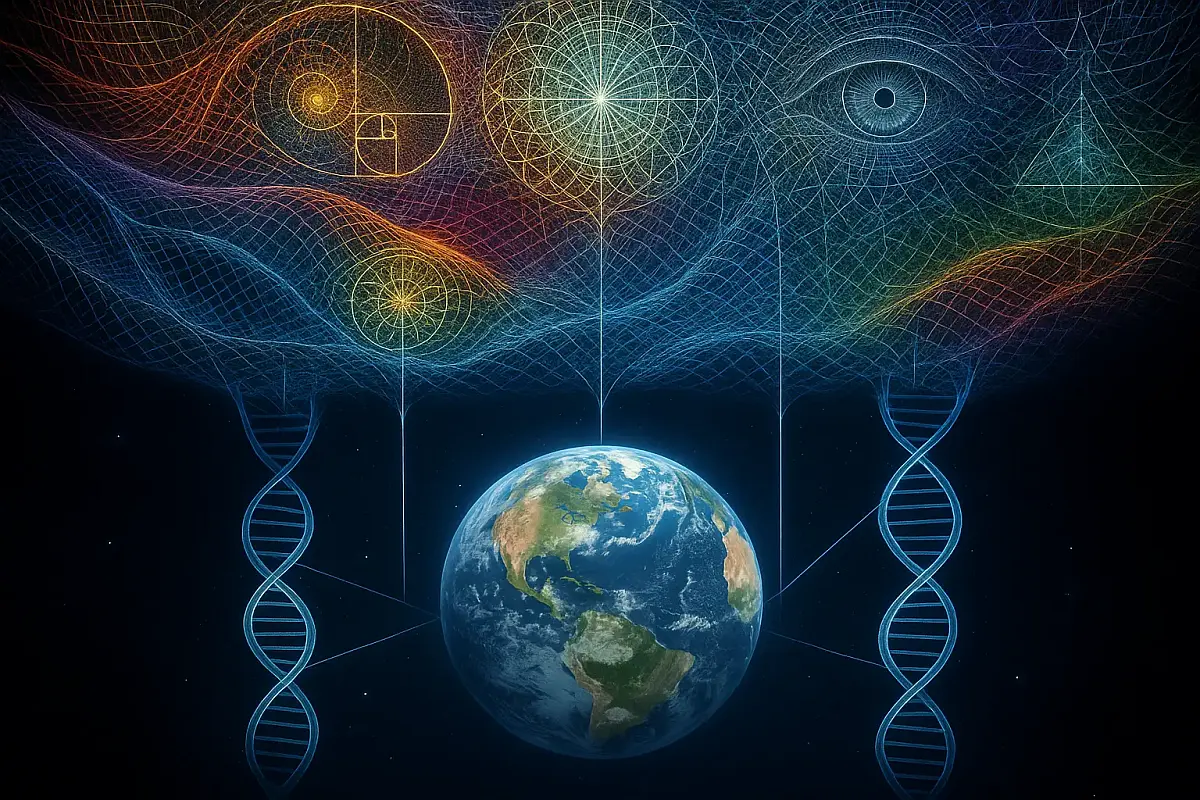
From Intelligent Design to Managed Evolution
Can evolutionary science and divine purpose describe the same story? Beginning with Fr. Martin Hilbert’s Catholic case for Intelligent Design, this essay examines the persistent conflict among evolution, Adam and Eve, original sin, and purposeful creation. It then explores The Urantia Book’s concept of managed evolution as a wider framework in which biological development, mind, personality, and divine intention become parts of one evolutionary process.

Adam and Eve: Eight Feet Tall and Purple
In this essay, I explore the intersection of religious legend, scientific discovery, and philosophical inquiry surrounding the figures of Adam and Eve. The essay critically examines the biblical narrative within the broader context of the Urantia Book, which presents an expanded cosmic interpretation of humanity's origins. The essay juxtaposes traditional religious teachings with modern genetic evidence, arguing for a reconciliatory approach that integrates evolutionary science with spiritual insights. Key themes include the symbolic and factual dimensions of Adam and Eve, the role of genetic upliftment in human history, and the ongoing quest for truth in understanding human origins.

The Gospel of Universal Heroism: We Don't Need Another Hero
This essay proposes that one of the most revolutionary dimensions of Jesus' gospel has largely gone unnoticed. Rather than establishing a new hero-centered religion, Jesus proclaimed a kingdom designed to eliminate humanity's dependence upon heroes altogether. His ministry consistently shifted responsibility from the exceptional individual to every son and daughter of God. Drawing upon insights from the sociology of religion, developmental psychology, leadership theory, and the cosmology of The Urantia Book, the essay argues that the modern challenge is about recovering the true gospel of the kingdom.