The Urantia Book’s Model of Personality, Moral Emergence, and Embryonic Human Development
This essay examines personhood through the cosmological framework presented in The Urantia Book, arguing that personality is a bestowed ontological reality originating beyond time and space rather than an emergent product of biological or psychological development. The author argues that The resulting model relocates abortion ethics from disputes over biological thresholds to a broader ontological and developmental context, proposing a shift from polarized legalism toward cosmically informed compassion.

Extending the Landscape: A Cosmological Model of Consciousness
This essay intends to serve as a gateway to a more expansive treatment that situates theocosmic cosmopsychism within the pluralistic landscape of consciousness studies and integrates it with a revelatory cosmology in which consciousness ultimately derives from Deity, operates through a universal mindal architecture, and is unified in the individual by the unique endowment of personality.
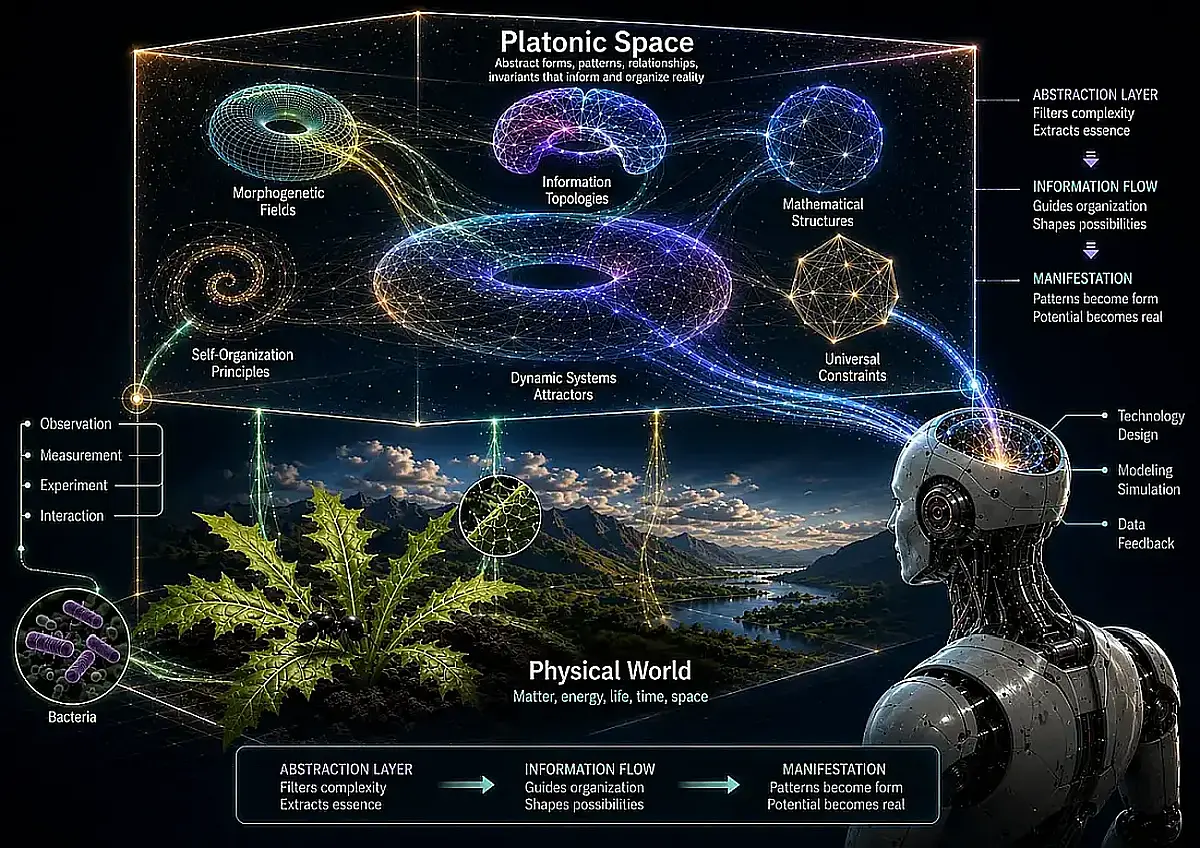
The Organizaion of Possibility
Illustrates how possibility becomes organized through developmental biology, systems theory, and Michael Levin's research on basal cognition — and what it suggests about the architecture of living systems. The discussion places these scientific developments into conversation with the cosmology of The Urantia Book.

The Adjutant Mind-Spirits: A Living Framework for Intellectual Growth and Evolutionary Patterns
This essay explores the revelatory concept of the seven adjutant mind-spirits as presented in The Urantia Book, proposing that these divine mind circuits serve not only as catalysts for evolutionary consciousness but also as formative fields akin to morphogenetic templates in biology. Bridging insights from spiritual cosmology, evolutionary biology, and comparative mysticism, the author examines how the adjutants may function as layered, intelligent interfaces between biological life and spiritual development.
Cosmic Consciousness
This essay serves as an introductory exploration of cosmic consciousness within the revelatory cosmology of The Urantia Book, examining how human awareness extends beyond material cognition through the interaction of mind, spirit influence, superconsciousness, and personality within a larger cosmic framework.

The Master Seraphim
The presentation of the master seraphim in Paper 114 of the URANTIA Book, appears to be "new" epochal revelation. That is, a heretofore unknown disclosure of an order of the existence of a class of angels that provide special overarching service to an evolving planet. The master seraphim are resident on URANTIA working to assist the spiritual administration of the planet. They work entirely in the background as "ideational clearinghouses, mind focalizers, and project promoters" to promote the progressive growth of society and civilization.

The Urantia Book
The papers described themselves as the Fifth Epochal Revelatoin to humanity. Their purpose is to “expand cosmic consciousness and enhance spiritual perception.”

How Jesus Meditated
The late Peter Holley has left us with an essay that provides some profound analysis for thinking through these deep spiritual and cosmic concepts. It is entitled Meditation in The Urantia Book - Jesus Style and was published in the Herald magazine in the Fall 2004 edition. I will point out three themes Peter analyzes. First, the term meditation used in the Urantia Book is very different from the conventional late 20th century usage as an altered state of consciousness; it is rather meant as close or continued thought - specifically, thought devoted to religious (or cosmic) subjects. Secondly, the Thought Adjuster dwells and interacts within "the thinking centers of the individual's mind” 34:5.6 (379.6). And third, Peter makes the important distinction that meditation Jesus-style is active not passive. He explains with authoritative references why emptying the mind for passive meditation can even be dangerous to one’s material and mindal health if not one’s spiritual development.
Identity: The Sacred Architecture of Selfhood
Who are we beneath the changing roles, memories, beliefs, and social identities by which we ordinarily define ourselves? This essay explores The Urantia Book’s distinction between personality, identity, and selfhood, tracing the developing person from mortal experience through the psychic circles toward soul growth and eventual Adjuster fusion. It presents identity not as something merely discovered or declared, but as something progressively formed through choice, relationship, spiritual integration, and the long adventure of becoming.